02 / Household objects / Space shapes the habit
Objects of Home Life
Some of a home’s most revealing objects live at its edges: where shoes come off, water collects and the day’s small messes are cleared.
Read the room before the object
A household tool can seem unnecessarily specialized when its surroundings are missing. A long shoehorn makes a different kind of sense beside a shoe-removal threshold than it does at the back of a wardrobe. A tray with hidden drainage is more intelligible when you see the water used during tea preparation.
Homes in Japan, China and Sweden offer useful starting points for these examples. Yet similar needs appear elsewhere, and objects travel through shops, migration and family habits. A shoes-off household in Canada may find the same tool useful without recreating a Japanese interior. Context explains a fit; it does not place a cultural lock on an ordinary object.
The long shoehorn at the threshold
In Japanese homes with a genkan, the entrance provides a transition between outdoor footwear and the interior. A shoehorn, often called a kutsu-bera, can make putting shoes back on easier while helping avoid crushing the heel counter. A long-handled version brings the tool within reach without the same amount of bending.
The shoehorn itself is not exclusive to Japan. What makes this setting informative is its placement within a repeated arrival-and-departure routine. A standing holder can make the tool visible to guests, while a seat may offer a steadier alternative for someone who finds balancing difficult.
If you are visiting a home, follow the host’s guidance rather than assuming every step from a travel article applies. Slipper arrangements, floor materials and available space differ. If you are adapting the idea at home, first make the entrance clear and safe. A shoehorn is not a walking aid and should not be used to support body weight.
The tea tray that expects water
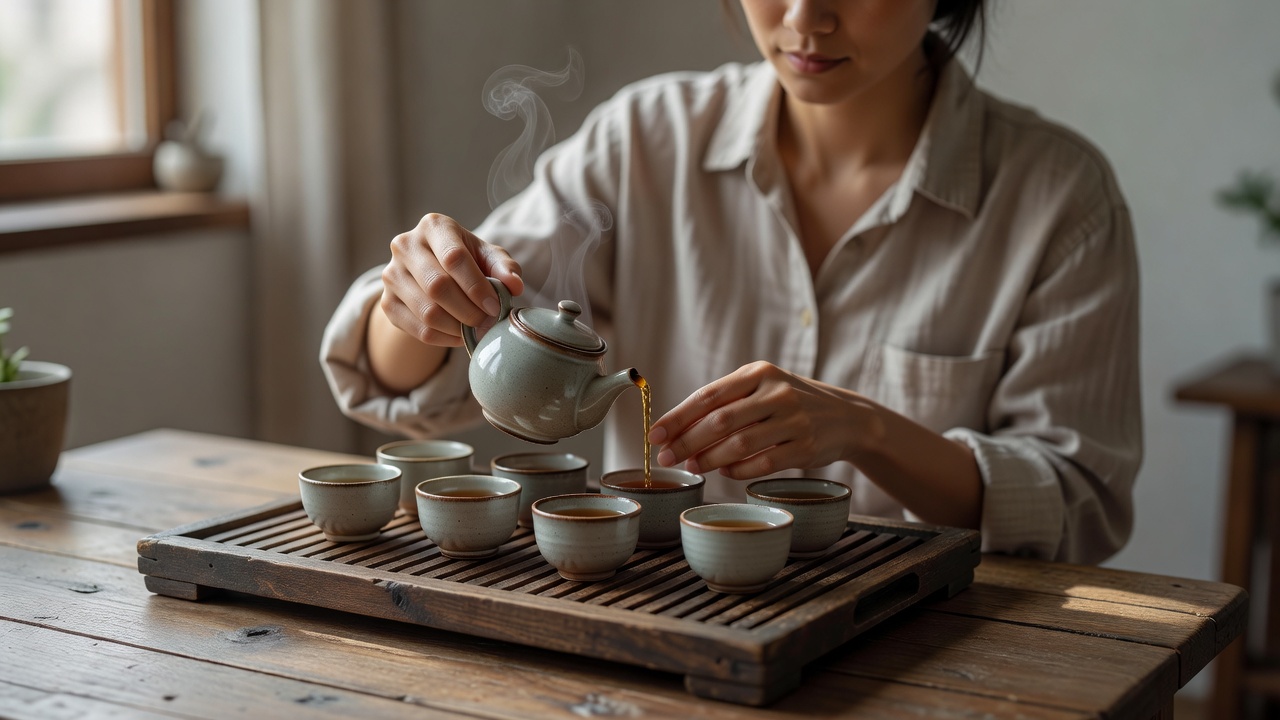
Some Chinese gongfu tea arrangements include a tray designed to catch water from warming vessels, rinsing or spills. Slats or holes let liquid enter a reservoir below; other designs send it through a tube to a separate container. This changes the working surface from something that must remain dry to something that intentionally manages wet steps.
The tray does not define all Chinese tea drinking. Practices associated with Fujian and Guangdong have many variations, and a careful tea session can also use a simple bowl and a dry surface. Taiwan has its own diverse tea settings and adaptations. Treat a draining tray as one arrangement, not an entrance requirement for appreciating tea.
Before buying, imagine emptying it. Is the reservoir easy to remove? Can the tubing be cleaned? Will the tray fit where you actually sit? Bamboo, wood and other materials need appropriate drying and care. Water left standing in hidden corners is a maintenance problem, not an essential part of the atmosphere.
The Swedish dishcloth between sponge and cloth
A Swedish dishcloth is commonly made from a cellulose-and-cotton blend. It is relatively stiff when dry and becomes flexible when wet. This combination makes it useful for wiping counters and absorbing everyday spills, provided the product is suited to the surface and cleaning task.
Its appeal is not that Sweden possesses a single correct way to clean. It offers one reusable format among many. Similar cloths are sold internationally, including in Germany and the United States, and a product’s marketing name does not establish where that particular item was manufactured.
Rinse out residue, let the cloth dry and follow the maker’s cleaning instructions. Do not assume every printed cloth tolerates identical temperatures or chemicals. Separate tasks that could spread contamination, especially after handling raw food. A reusable cloth still needs a workable hygiene routine; replacing paper with fabric does not remove that responsibility.
Translate the useful part
Misconception
- A domestic object represents an entire national lifestyle.
- Reusable automatically means lower impact.
- The visual arrangement is the essential feature.
Explanation
- Households differ in space, access, preference and ability.
- Materials, lifespan and laundering change the comparison.
- Placement, drainage and maintenance often matter more.
| Object | Useful condition | Practical question |
|---|---|---|
| Long shoehorn | A regular footwear-changing point | Can it be reached without unsafe balancing? |
| Draining tea tray | Tea preparation that uses water around vessels | Where will wastewater go? |
| Cellulose dishcloth | Repeated wiping with a cleaning routine | Can it dry fully between uses? |
The most successful borrowing may be a small adjustment rather than a new purchase. Move an existing shoehorn to the door, put a washable catch bowl beside your tea equipment or give cleaning cloths a better drying place. Understanding another household’s logic can make your own routine clearer without turning its culture into a decorating theme.